
~ Roots of Yoga ~
Yoga & Meditation Teacher Training
1 August 2026 - 1 August 2027
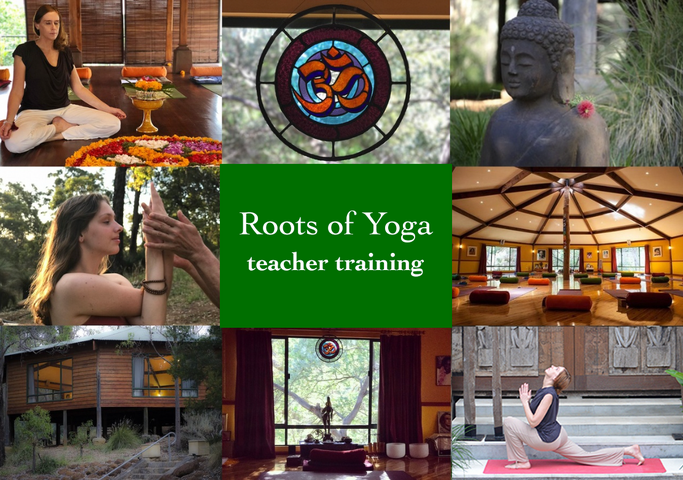
gain experience and expertise
hatha yoga method • yoga asana • meditation • pranayama • mudra • mantra • yoga nidra • dynamic yoga anatomy • trauma aware • yoga theory and philosophy • sequencing & teaching • spiritual learning community • personal transformation
The Roots of Yoga 500hr teacher training is both in-person and online over 12 months. All sessions are live-streamed and the entire program and resources are accessible from our online learning platform.
The Roots of Yoga Teacher Training is a 12 month, 500 hour Yoga and Meditation Teacher Training program based in Perth, Western Australia. Developed by Kookaburra Yoga director Mandy Knox, it offers a comprehensive and integrated approach to yoga practice, meditation, philosophy, anatomy, teaching methodology, practicum and yogic living.
This training is for those who feel called to engage more deeply with yoga, whether to teach, to integrate the teachings into their work and life, or to develop a more meaningful and sustained personal practice. For many, this is a shift from practicing yoga to living and understanding it more fully.
Delivered at Kookaburra Yoga in the Perth Hills, with the option to attend online, the program combines traditional teachings with a clear and practical approach to modern practice and teaching. You will gain a recognised qualification enabling you to teach yoga and meditation professionally, together with the knowledge, skills and confidence to apply the teachings in a grounded and authentic way.
Through a blend of in person and online learning, students explore Haṭha Yoga, meditation, yoga philosophy, anatomy, sequencing, teaching skills, ethics, practicum and personal inquiry within a supportive learning community. Whether your intention is to become a yoga teacher, meditation teacher, wellbeing practitioner, or simply to deepen your understanding of yoga as a transformative path, Roots of Yoga provides a structured and authentic foundation for lifelong learning and practice.
Training Highlights
• Twelve inspiring monthly weekend modules, each exploring a different aspect of yoga in a progressive and integrated way.
• Four-day residential retreat in nature, providing the opportunity to step away from everyday life and immerse yourself in practice, reflection and community.
• Classical yoga including yoga practice, meditation, breathwork, mantra and philosophy.
• Somatic movement and embodied learning, integrating contemporary understanding of the nervous system with the timeless wisdom of yoga.
• Dynamic anatomy, making movement, alignment and teaching practical, accessible and relevant.
• Practical teaching skills including sequencing, communication, observation and supervised teaching experience.
• Personal inquiry and self-development, supporting the integration of yoga into everyday life.
• Small group mentoring and individual support throughout the year.
• A warm and welcoming community of practitioners, learning together over twelve months.
• Flexible learning with studio, online and blended attendance options, plus recordings of all sessions.
• Pathways to 200, 350 or 500-hour certification, recognised by Yoga Australia.
Applications are now open, with places beginning to fill for our August intake. Scholarship applications close 30 June.
first step: watch the info session video
The recording provides a comprehensive overview of the training structure, curriculum, learning pathways, assessment options, mentoring, practicum opportunities, fees and payment plans. It also includes answers to many of the questions commonly asked by prospective students.
Once you have reviewed the information, we invite you to commence the application process. Applications are reviewed personally and places are offered to those who feel aligned with the intention and commitment of the training.
If you have any questions or would like to discuss whether the program is right for you, please feel welcome to contact Mandy directly.
Watch Video Recording
Introductory Workshop & Application
Saturday 1st August 10am-4pm
The Introductory Workshop is a full day immersion and forms part of the application and enrolment process for the Roots of Yoga Teacher Training.
The day is structured in the same way as a typical training module, offering a direct experience of the depth, pace, and approach of the course. You will spend time in the learning environment, connect with others who are considering the training, and gain a clear understanding of how practice, philosophy, and discussion are integrated across the program.
This is an opportunity to experience the training directly, ask questions, and understand what is required across the 12 months.
During the day you will experience:
• Asana, pranayama, and meditation as taught within the training
• Introduction to key philosophical foundations and source texts
• Integration of practice, theory, and facilitated discussion
• Guidance in how the training is structured and delivered
• Time for questions, reflection, and connection
Application & Enrolment
To attend the workshop, you are required to complete the application form and submit your booking.
Your place in the training is confirmed once your application has been received and accepted.
There are two ways to proceed:
• Pay the $200 application fee to attend the workshop. You will then receive details to complete payment of the remaining course balance
• Pay the full training fee at the time of booking. In this case, the $200 earlybird discount applies for bookings made prior to 1 August
Following the workshop, you have one week to reflect on your decision. If you choose to withdraw, a full refund of any training fees paid will be provided, excluding the $200 application fee.
This day provides a clear and grounded entry point into the training. We hope you can join us.
about the Roots of Yoga
The Roots of Yoga Teacher Training is the synthesis of over 30 years of dedicated study, practice, and teaching, developed by Kookaburra Yoga co-founder and director Mandy Knox, whose work is informed by enduring relationships with modern yogic masters, mystics, and traditional teachers.
This training brings together the wisdom traditions of yoga with contemporary understanding, including mindfulness, neuroscience, yogic psychology, Ayurveda, connection to nature, and both traditional and modern approaches to asana, biomechanics, and movement. A thorough grounding in Dynamic Anatomy is also included, taught by leading Australian yoga and anatomy educator Jean Campbell. The result is a training which is both deeply rooted and highly practical, supporting genuine transformation and the ability to teach with clarity and confidence.
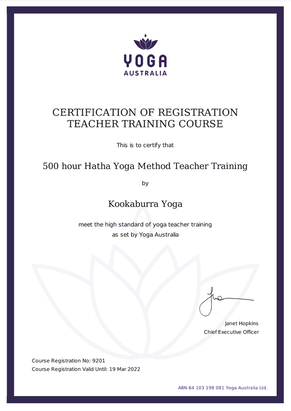
This 12 month program is registered with Yoga Australia at 500 hours and offers a comprehensive journey through the yogic traditions from ancient to modern. The training takes place at Kookaburra Yoga Sanctuary in the Perth hills, Western Australia, and is led by Mandy alongside a faculty of experienced teachers. Set within a natural environment on 10 acres, the sanctuary provides a setting which supports a more integrated way of living and learning.
All sessions are live-streamed, recorded, and available online for the duration of the course, allowing participation from anywhere. There is the option to attend fully in person, fully online, or through a combination of both. For those travelling from outside Perth, simple onsite accommodation is available during modules.
Across the year, the training includes weekend immersions, a residential retreat, fortnightly student-led classes, anatomy study, mentoring, and guided self-study. The program comprises 500 hours in total, including 350 contact hours and 150 hours of self-study, home practice, and assessment.
The emphasis is on integration. Traditional, esoteric and practical approaches are brought together so that practice becomes lived and embodied. You develop as a practitioner with depth and steadiness, and as a teacher with the capacity to hold space for others with intelligence and care.
On completion, you will be established in asana, meditation, mantra, and pranayama, with a clear understanding of the philosophical foundations which underpin the practice. You will graduate as a confident and capable teacher, supported by a strong community of peers and mentors who continue to walk the path alongside you.
Mandy is registered with Yoga Australia as a Senior Teacher, a designation which reflects over 1,000 hours of training and 10,000 hours of teaching. This level of accreditation allows the training to meet the highest standards required for professional recognition. Upon completion, you will be eligible to register with Yoga Australia as a Level 1 Teacher. Those with prior teaching experience may be eligible for Level 2 registration. This supports access to insurance, professional recognition, and ongoing development within the industry.
This training meets the educational and ethical standards of Yoga Australia and offers a clear pathway into teaching, continued study and meaningful work within the field of yoga.
at a glance...• 1 August 2026 – 1 August 2027
• 12 month, 500 hour training • Options to complete at 350 hour or 200 hour level with lesser commitment • Info Session & Morning Tea 30 May 26 • One Day Introductory Workshop – Sat 1 Aug • Monthly weekend immersions (two full days) • Wednesday evening practicums (approximately twice per month, online or in studio) • Mid-year break 7 Dec – 6 Feb • 3 day residential retreat (March long weekend) • 30 hour Dynamic Anatomy training plus 6 live online workshops with Jean Campbell • Mentoring Program • 12 month studio membership with free unlimited classes • In studio and online attendance options • One Day Introductory Workshop / Application Fee: $200 • Total Investment: $5,600 • Earlybird: Introductory Workshop fee waived when you enrol and pay in full (refundable if you cancel) • Payment plans available across any reasonable duration ($100 fee) • Youth and Diversity Scholarships • Work exchange and fee offset options available • 20% discount for Kookaburra Yoga Teacher Training graduates |
|
Now, more than ever, the world needs yoga and meditation teachers and leaders with the knowledge, skills and expertise to guide others to be peaceful, calm, grounded and resilient - the qualities which come about through the Roots of Yoga Teacher Training program.
|
|
|
about the lineage
Yoga is an ancient system, perhaps dating back to 500 BCE or earlier, which has evolved in India over millennia through the wisdom of early Tantra, the Upanishads and the many sages, saints, texts, and traditions which have emerged and endured across time. The teachings are timeless, offering insight into ourselves, our lives, and the nature of the world we move within.
In this training we trace back to these roots as a way of understanding how yoga has developed, how it has been transmitted, and how modern yoga has come to be practiced and taught as it is today. Through this process, the teachings become contextualised, and the practitioner is able to discern what is essential, what is skillful, and how to teach in a way which is both intelligent and grounded.
This training is a broad education in the darshanas, or fields of knowledge, which inform modern Hatha Yoga, including Hatha, Raja, Nada, Bhakti, Jnana, and Kriya Yoga, together with Samkhya, Tantra, Vedanta, Advaita, Hindu and Buddhist mythology, and Ayurveda. These are explored in a way which relates directly to practice and lived experience, allowing understanding to develop with clarity and relevance.
Within this wider context, the training is grounded in a living lineage which draws from the major streams of modern yoga as they have been passed down.
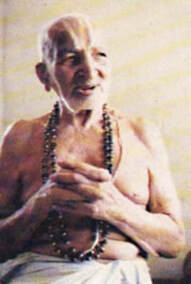
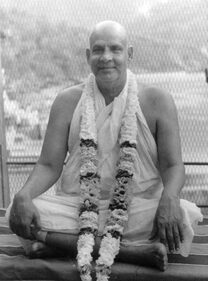
Two of the most influential teachers in the modern era are Krishnamacharya in the south of India and Swami Sivananda in the north. Much of the yoga taught around the world today can be traced, directly or indirectly, to these two traditions.
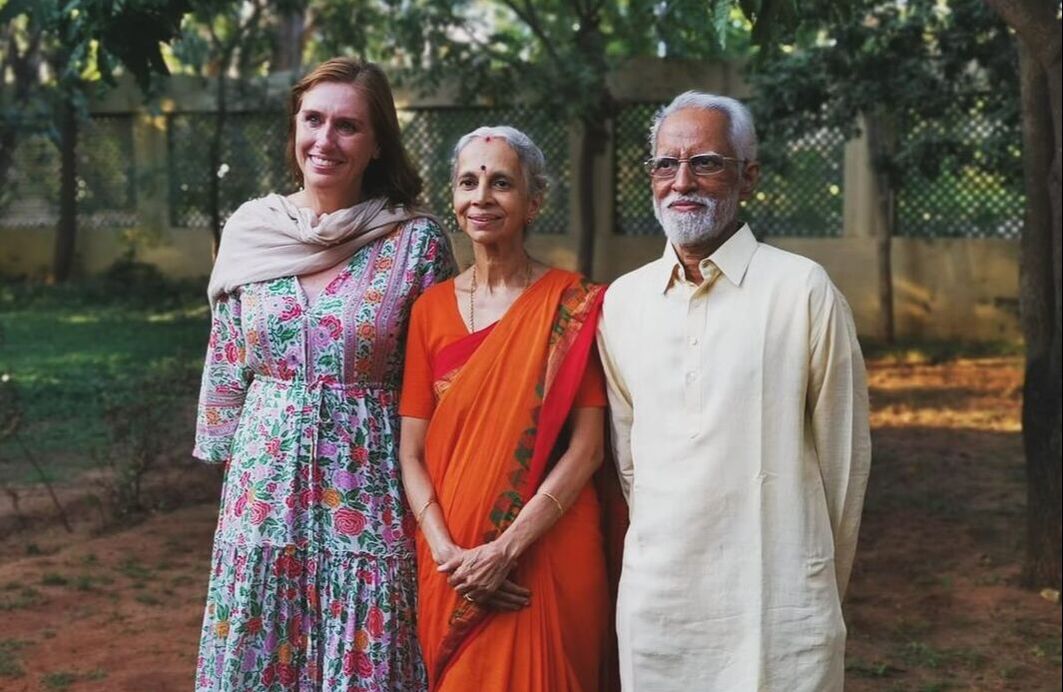
Mandy has studied and practiced within both lineages and continues her study with A.G. Mohan and Indra Mohan, direct disciples of Krishnamacharya for the final 18 years of his life, and respected holders of this tradition. Alongside this, there has been a lifelong immersion in the Sivananda tradition, and yogic spirituality.
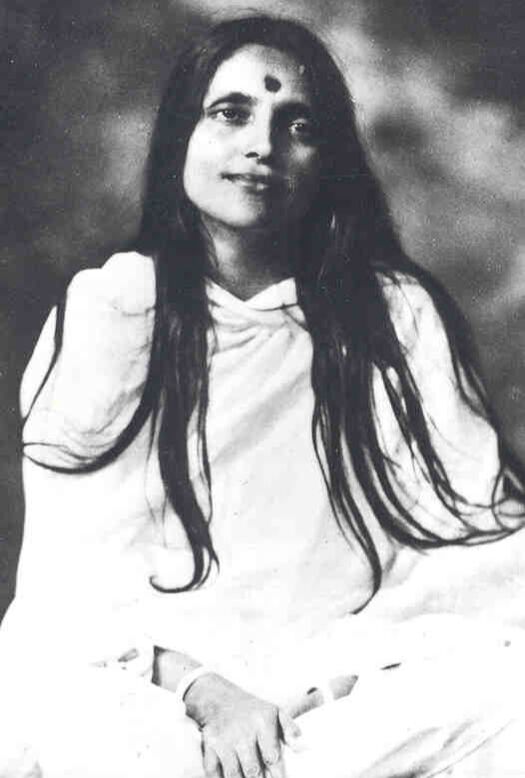
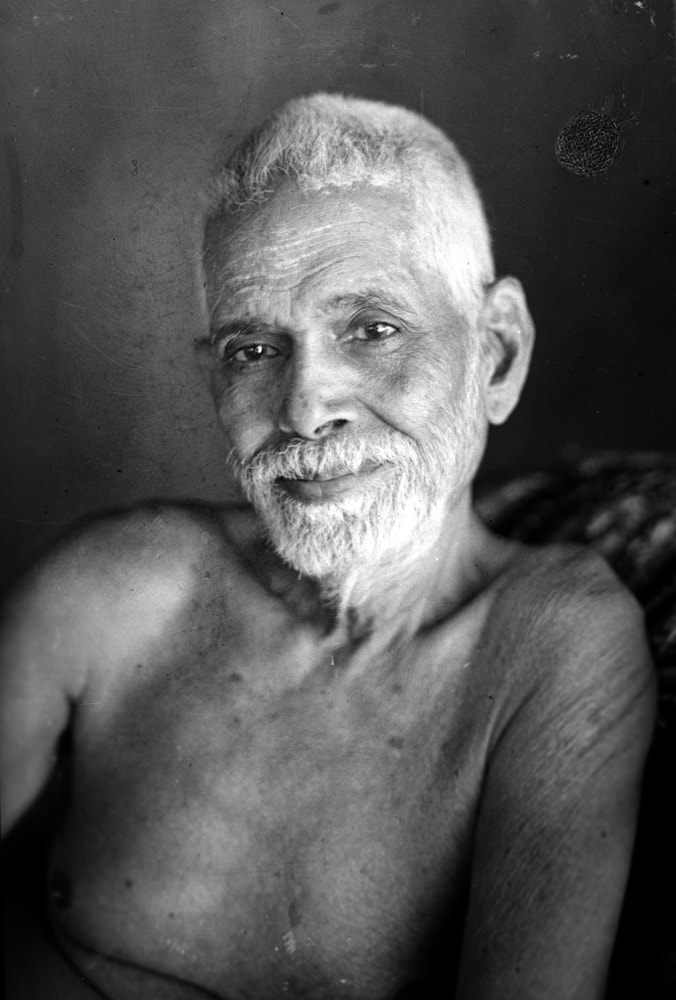
Time spent in India within these traditions, and in the ashrams of the great contemporary saints Ramana Maharshi and Anandamayi Ma, continues to inform the depth and integrity of the training.
This foundation allows the teachings to be shared in a way which honours their origins, while also supporting a clear, practical and intelligent approach to modern practice and teaching.
|
|
Highlights
- Study directly with senior teachers within an established and authentic lineage
- 500 hours of learning across 12 months, with experienced teachers guiding and supporting your development
- Flexible learning options, with the ability to attend in studio, live online, or through a combination of both
- A peaceful and spacious learning environment, with a beautiful studio set within the natural bushland of the Perth hills
- The opportunity to broaden your knowledge and skillset, while integrating the teachings into your own personal practice
- Connection with a community of sincere practitioners and teachers, sharing the journey together
- A 12 month Kookaburra Yoga membership, with access to studio classes as part of your training
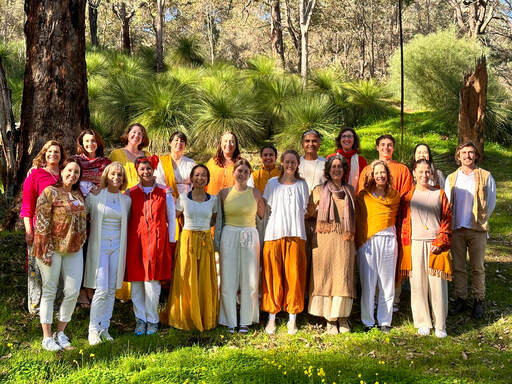
Our 2025 graduates
Structure of Program
- The training is delivered through a combination of in-person immersions, online learning, practical teaching experience, and ongoing support, allowing the material to be explored, applied, and integrated over one year.
- 1 introductory workshop, and 10 monthly weekend workshops, supported by an online learning platform with access to recorded content and resources
- Remote learning options, with all sessions live-streamed and recorded for those unable to attend in person due to distance or other circumstances
- A 3 night residential retreat at Kookaburra Yoga Sanctuary over the March 2027 long weekend, offering the opportunity to live and learn in sangha (community), with daily rhythm, practice, and nourishment reflective of a traditional ashram environment
- 30 hours of Dynamic Anatomy training online with Jean Campbell, one of Australia’s leading yoga anatomy educators
- 6 live, online, interactive Dynamic Anatomy workshops (2 hours each) with Jean, applying anatomical understanding directly to yoga practice and teaching
- Live teaching experience through Wednesday evening student-led classes, supervised and supported, held in studio and live-streamed (about 2 a week)
- Personal mentoring to support the development of your teaching practicum and your growth as a practitioner and teacher
- A final teaching component delivered within a public event, offering the opportunity to teach in a supported and real-world setting, with friends and family welcome to attend
- Personalised business and professional development mentoring, supporting you to clarify direction, work through obstacles, and bring your skills into the world in a meaningful way
What you gain
- Real Skills – Practical skills and knowledge which support your personal development and allow you to create meaningful change in both your inner and outer life, with tools you can draw upon well beyond the duration of the training.
- Wisdom – An embodied and applied understanding of the full spectrum of yoga practices, including asana, pranayama, meditation, mantra, and related teachings, grounded in both experience and study.
- Confidence – A clear and steady foundation of knowledge and skills which allows you to teach and share yoga and meditation with confidence, working with people of different ages, abilities, and backgrounds.
- Leadership – A natural sense of authority and leadership which develops through sustained study, practice, and lived experience, allowing you to hold space with clarity and presence.
- Sensitivity – An understanding of trauma-sensitive teaching and communication, supporting you to work with care, awareness, and respect for the individual experience of each student.
- Support – Ongoing guidance, resources, and practical support to begin teaching immediately within your own community, with a clear pathway into professional practice.
- Community – A connected and supportive network of peers and teachers, with shared experience and understanding, which continues beyond the training.
- Qualification – A recognised teaching certificate enabling you to teach yoga and meditation both locally and internationally.
- Credibility – Eligibility to register as a Level 1 or Level 2 Yoga and Meditation Teacher with Yoga Australia, supporting professional recognition and standards.
- Accountability – A training grounded in ethical teaching and professional integrity, providing a level of accountability within an otherwise unregulated industry.
- Success – The skills, understanding, and support to move forward with clarity in both personal and professional directions, including teaching, business, and other pathways.
- Personal Growth – A depth of personal development and inner change which unfolds gradually across the year, often becoming one of the most meaningful aspects of the training.
- Empowerment – A genuine sense of personal and professional empowerment which arises through consistent practice, overcoming challenges, and recognising your own capacity and potential.
youth & diversity scholarships
For this training, we are offering a small number of scholarships to support accessibility and inclusion within the program. There are two Youth Scholarships and two Diversity Scholarships available. The Youth Scholarships are for those who are younger, on a low income, and for whom the full course fees would be a genuine barrier to participation.
The Diversity Scholarships are intended to support those from underrepresented or marginalised backgrounds, or those who bring a perspective or life experience which would meaningfully contribute to the learning environment and yoga community beyond the training. These scholarships are offered with the intention of making the training more accessible, while maintaining the integrity and commitment required for the program.
If you feel this applies to you, you are welcome to apply. Please click through to our Scholarship Application form. We suggest answering the questions offline first and then pasting your answers into the relevant fields.
Scholarship applications close 30th June. We will notify applicants of the outcome by the 7th July 2026.
Important Dates
|
Info Session & Morning Tea
Saturday 30 May 10am-12pm Introductory Workshop Saturday 1st August. 10am-4pm. Weekend Modules Saturdays 10am-6pm & Sundays 9am-4pm
3 Night Residential Retreat
Dynamic Anatomy Online Workshops Saturdays 10am-12pm
Practicum - student-led classes
Public Event
Graduation & Dinner
|
HoursThis training comprises a total of 500 hours, including 350 contact hours (with teachers) and 150 non-contact hours (self-study, practice, and integration). Weekend Modules, Reviews & Graduation Includes Modules 1–7, End of Year Review, Modules 9–10, Final Review, and Graduation. • 250 contact hours • 110 non-contact hours Residential Retreat 4 Day Residential Retreat • 30 April – 3 May 2027 • 30 contact hours • 20 non-contact hours Dynamic Anatomy Online training and live interactive workshops with Jean Campbell. • 40 contact hours • 12 non-contact hours Practicum Student-led, supervised teaching sessions held throughout the training. • 28 contact hours Mentoring Individual mentoring to support your teaching development and personal progression. • 2 contact hours • 8 non-contact hours Total Hours • 350 contact hours • 150 non-contact hours • 500 total training hours |
the curriculum
The curriculum is designed as a progressive and integrated course of study, where practice, philosophy, and teaching develop together over time.
|
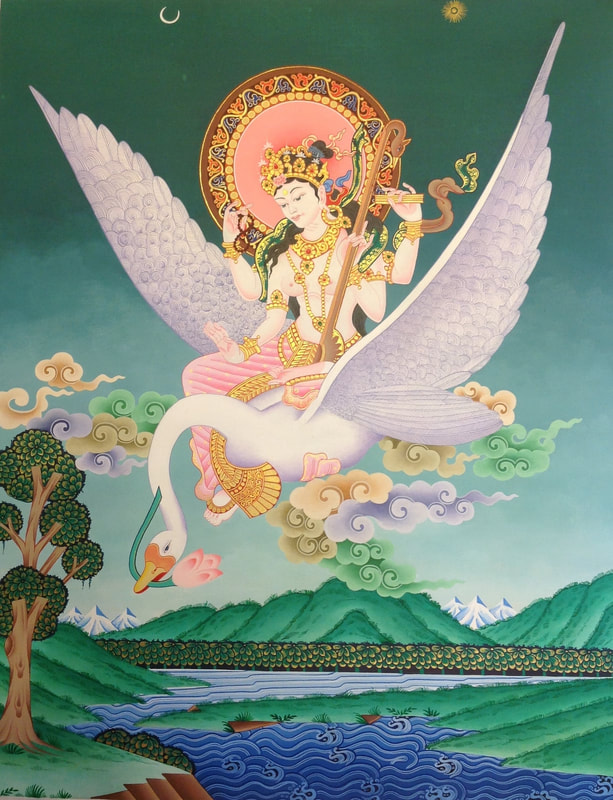
'True yogic education is lighting a lamp, not filling a bucket.' A.G.Mohan
|
'The attitude of letting go and connecting with the inner presence
of quiet & steadiness is most important.'
~ Indra Mohan
format
The training is delivered through a combination of in-studio immersions, online learning, teaching practice, and ongoing support, allowing the material to be explored and integrated steadily over time.
You may attend in studio at Kookaburra Yoga Sanctuary in the Perth hills, or join live online via Zoom. All sessions are live-streamed, recorded, and available through our online learning platform, allowing you to revisit content or catch up if required.
Attendance at all modules and core sessions is required to graduate.
Weekend Workshops
Residential Retreat
Dynamic Anatomy
Supervised Teaching
Studio Membership
Self-Study & Assignments
Mentoring & Support
Reviews & Assessment
Mid-year and final reviews provide an opportunity to consolidate learning, complete assessments, and demonstrate understanding through practice, discussion, and teaching.
Public Event & Graduation
The training concludes with a collaborative public event, where students teach and share their work within a supported environment, followed by a graduation ceremony.
Graduates are invited to continue teaching within the Kookaburra community in our weekly community classes for up to one year post-graduation, gaining ongoing experience and connection.
You may attend in studio at Kookaburra Yoga Sanctuary in the Perth hills, or join live online via Zoom. All sessions are live-streamed, recorded, and available through our online learning platform, allowing you to revisit content or catch up if required.
Attendance at all modules and core sessions is required to graduate.
Weekend Workshops
- The training is centred around 11 weekend modules delivered monthly.
- Each weekend includes lectures on key topics, guided practice, facilitated discussion, and practical workshops. Students learn and experience asana, pranayama, meditation, mantra, yoga nidra, bandha, kriya, and related practices in a progressive and integrated way.
- The practical components are directly linked to the theoretical material presented, allowing knowledge to be applied and understood through experience.
Residential Retreat
- Module 8 is delivered as a 4 day residential retreat held at Kookaburra Yoga Sanctuary.
- This immersion offers the opportunity to live and practice together in community, following a daily rhythm of practice, study, rest, and shared meals. The retreat reflects a traditional ashram environment and allows for deeper integration of the teachings without the usual distractions of daily life.
- Accommodation options include shared rooms, camping onsite, or attending daily while staying offsite. Meals are provided and are plant-based and gluten-free.
Dynamic Anatomy
- Dynamic Anatomy is delivered through a combination of online study and live workshops with Jean Campbell.
- You will complete a 30 hour online course through Jean’s learning platform, alongside six live-streamed workshops which focus on the practical application of anatomy within yoga practice and teaching.
- The training covers key anatomical structures, movement patterns, and common imbalances, supporting safe, intelligent, and appropriate instruction.
- Completion of the anatomy course and attendance at the workshops is required to graduate.
Supervised Teaching
- Weekly Wednesday evening classes provide live teaching experience.
- Students design and teach supervised classes, both in studio and online, receiving guidance and feedback from trainers.
- A one-to-one mentoring session is provided prior to your practicum to support preparation and development.
- These sessions are a key part of building confidence, skill, and real-world teaching experience.
Studio Membership
- All trainees receive a 12 month studio membership, allowing attendance at regular classes and member events at no additional cost.
- This supports the development of a consistent personal practice and connection with the Kookaburra community throughout the training.
Self-Study & Assignments
- Each month includes structured self-study, reading, and assignments which explore the material more deeply.
- Assignments vary and may include written reflections, class design, sequencing, meditation recordings, and practical applications of the teachings. These are designed to support both personal development and teaching capacity.
- Students are expected to dedicate regular time each week to study and practice, allowing the material to be integrated progressively.
Mentoring & Support
- Each trainee is assigned a mentor, a graduate of the training, who provides support, feedback, and guidance throughout the course.
- Regular reflection and documentation of practice are required, supporting self-awareness and integration of the teachings.
- In addition to this prior to your teaching practicum you have a one-to-one mentoring session with Mandy.
Reviews & Assessment
Mid-year and final reviews provide an opportunity to consolidate learning, complete assessments, and demonstrate understanding through practice, discussion, and teaching.
Public Event & Graduation
The training concludes with a collaborative public event, where students teach and share their work within a supported environment, followed by a graduation ceremony.
Graduates are invited to continue teaching within the Kookaburra community in our weekly community classes for up to one year post-graduation, gaining ongoing experience and connection.
modules
The program content is delivered across 10 sequential modules, each integrating theory and practice. There is also an introductory one day workshop, two weekends dedicated to review and assessments, and graduation.
Over each module, you will learn the asana, pranayama, meditation, mudras, and mantras relevant to each topic, building on knowledge, technique, personal practice, and teaching methods across the year. In addition to the modules, there are two Review weekends dedicated to consolidation, reflection, and assessment.
Module 1. An Introduction to the World of Yoga • Opening the Door to a New Way of Being
An opening into the wider field of yoga, establishing a foundation in practice, philosophy, and context. This module introduces the core texts, traditions, and practices, while beginning to cultivate a steady and sustainable personal practice.
Topics
• About the Hatha Yoga Method • Texts and traditions
• An introduction to the world of yoga
• Patanjali’s Yoga Sutras and the Eight Limbs of Yoga
• Mystic masters • saints, sages, and gurus
Workshops / Practical
Foundation asanas for a stable base
Pranayama, mantra, and meditation
Module 2. The Story of Yoga • From Ancient to Modern, East to West
An exploration of yoga across time, tracing its development from ancient origins through to modern practice. This module provides historical and philosophical context, alongside the establishment of ethical foundations and foundational sequences.
Topics
• A history of yoga across time and traditions
• Surya and Chandra Namaskar
• The Hatha Yoga Pradipika • working with the energies of sun and moon
• Yamas and Niyamas as an ethical foundation
• Gayatri Mantra and the Vedas
Workshops / Practical
Foundation asanas of Hatha Yoga
Surya Namaskar and warm-up sequences
Pranayama, mantra, and meditation
Module 3. The Yoga of Krishnamacharya • Personalising and Teaching Yoga
A focus on yoga as an individualised and responsive practice, introducing principles of teaching, class structure, and adaptation. This module brings attention to safety, sensitivity, and the responsibility of guiding others.
Topics
• Yoga for the individual • adapting practice appropriately
• Structuring a class • the class arc
• Om and the Upanishads
• Trauma-informed yoga and the Eight Limbs
• Frameworks of safety in teaching
Workshops / Practical
Designing sequences
Cues, props, and adjustments
Trauma-informed teaching approaches
Maitri (loving kindness), Mahamudra, bandhas, Nadanusandhana
Module 4. Journey of the Self to the Self
A deeper inquiry into the nature of the self through the lens of yogic philosophy. This module explores the koshas, the subtle body, and the frameworks which support understanding of our multi-dimensional experience.
Topics
• Samkhya philosophy and the story of creation
• The Taittiriya Upanishad • the koshas
• The subtle body across traditions
• The yoga body from yogic, tantric, and Ayurvedic perspectives
Workshops / Practical
Asana and the koshas
Posture and pandiculation
Sri Yantra
Standing and balance asanas
Module 5. Yogic Meditation • Yoga and the Mind
An exploration of meditation and the workings of the mind, including patterns, conditioning, and attention. This module introduces Yoga Nidra and supports the development of a more refined and sustained inner practice.
Topics
• What is meditation
• Meditation and the brain
• The higher limbs of yoga
• Vrittis, samskara, vasana, and sankalpa
• Kleshas and kriya yoga
• Yoga Nidra and states of consciousness
Workshops / Practical
Yoga Nidra stages and application
Seated asanas and twists
Asana for prana vayu
Padma (lotus) meditation and sequencing
Module 6. The Subtle Self and the Yoga of Sound
A deep exploration of mantra, sound, and the energetic dimensions of practice. This module explores the relationship between breath, vibration, and awareness, alongside further development in pranayama and asana.
Topics
• Mantra Yoga
• Nada Yoga
• Kundalini Yoga • chakras, nadis, and life force
• Laya Yoga and subtle sound
• Pranayama and the prana vayus
• Progressions in asana
Workshops / Practical
The story of Om
Mudra, mantra, and visualisation
Asana with mantra
Pranayama techniques
Inversions and sequencing for safety
Module 7. Buddhi Mind • Wisdom, Creativity, and Flow
A movement into deeper inquiry, creativity, and insight, drawing from both yogic and Western perspectives. This module explores consciousness, self-inquiry, and the integration of practice into personal expression.
Topics
• Western and yogic psychology
• Self-inquiry and Advaita Vedanta
• Consciousness and creativity
• The Mandukya Upanishad
• The Bhagavad Gita and the hero’s journey
Workshops / Practical
The hero’s journey • personal reflection
Jungian mandalas and dream awareness
Restorative yoga
Movement, alignment, and cueing
Module 8 • Residential Retreat. Yogic Living. Visioning Your Life
An immersive retreat experience, living and practicing in community. This module focuses on daily rhythm, personal practice, and integrating yoga into the fabric of everyday life.
• Applying yogic knowledge to life
• Ishvara pranidhana • devotion in modern life
• Shakti • expression and communication
• Visioning your life and work
Topics
• The authentic teacher • living what you teach
• Personal sadhana and daily practice
• Yogic diet and nourishment
• Dinacharya and ritucharya • daily and seasonal rhythms
Workshops / Practical
Designing your daily routine and personal practice
Cooking demonstration, Ayurveda
Evening practices, storytelling, fire ceremony, meditation
Module 9. Modern Yoga Asana
An examination of the evolution of modern yoga practice, including different styles and approaches. This module brings awareness to how yoga is practiced today and how it may be adapted across different contexts and stages of life.
Topics
• Early modern yoga
• Evolution of modern practice
• Contemporary yoga styles
• Gender and yoga
• Yoga across the stages of life
Workshops / Practical
Teaching beginners yoga
Somatic awareness in yoga
Yin, restorative, Ashtanga, Sivananda, and Vinyasa approaches
Module 10 • Into the World
A transition from training into application, bringing together teaching, communication, and professional pathways. This module supports you to step forward with clarity and confidence in sharing your work. turning attention towards personal and professional direction. This module supports clarity, expression, and the articulation of your path within yoga and beyond.
Topics
• The business of yoga • structure, finance, and professional conduct
• Marketing, ethics, and communication
• Teaching beginners and teaching meditation
• Developing a life and business plan
Workshops / Practical
Teaching meditation to diverse groups
Marketing and communication
Design and delivery of a public class or program
Planning workshops, retreats, and offerings
competenciesOn completion of this training you will have a sound knowledge & practical experience in the following areas.Yoga Theory
• Philosophy and psychology of yoga based on key texts, including the Yoga Sutras of Patanjali • The history of yoga, its traditions, teachers, and paths • Sanskrit terminology, key concepts, and essential language of yoga Asana • The Hatha Vinyasa Krama approach of Krishnamacharya, integrating breath and movement • Functional and safe movement in asana, applicable to both practice and daily life • Foundation asanas, including variations and counterposes • Modern approaches to practice, including Hatha, Vinyasa, Restorative, and Yin Yoga Sequencing • Principles of sequencing and structuring group classes • Designing sequences for different needs and contexts • Clear cueing, communication, and appropriate adjustment Pranayama • Foundational pranayama practices and underlying theory • Integration of breath, mantra, and awareness • Application of pranayama to support regulation of mind and emotions Sound & Mantra • Integration of sound and mantra within asana and practice • Mantra and sound as support for meditation • Nyasa as a practice of embodying sound • Chanting practices including Sanskrit and Vedic chanting Meditation • Theory of meditation and the nature of mind, drawing from the Yoga Sutras • Eastern and Western perspectives on consciousness and psychology • Key meditation traditions, practices, and their application Anatomy & Physiology • Functional anatomy and physiology as applied to yoga practice • Understanding movement, structure, and safety in asana • The nervous system and internal systems, and the role of yoga in supporting health and function Japa & Mantra Practice • Theory and significance of mantra • Mantras for chanting and meditation • Application of mantra for wellbeing and healing Yogic Lifestyle • Yogic values and ethics in daily life • Ayurvedic principles including doshas, prakriti, and diet • The yogic diet, including sattvic and pranic principles Yoga Energetics • Mudras and bandhas and their integration into practice and teaching • The subtle body, including nadis, prana, vayus, granthis, chakras, and kundalini • Concepts of consciousness from both yogic and Western perspectives Personal Practice • Developing an intelligent, meaningful, and sustainable personal practice • Establishing a foundation for authenticity in teaching and communication Teaching Methods • Teaching with intelligence, sensitivity, and integrity • Communicating clearly, both verbally and non-verbally • Developing your own voice and approach as a teacher • Designing and delivering classes, workshops, retreats, and longer programs Business & Professional Development• Integrating yoga into life and work • Practical pathways into teaching, including employment and self-employment • Ethical marketing, communication, and professional conduct • High-level life and business planning |
|
Testimonials
Hear from some of our recent graduates, many of whom are already teaching here at Kookaburra and/or in the community.
/
- 1
- 2
- 3
- 4
- 5
This teacher training has been more than I could have ever imagined. I began this incredible course a year ago expecting to learn to teach yoga. While that is true what I have gained personally far outweighs all expectations. To be held my mentors, teachers and peers so lovingly throughout our journey was incredible. The teaching program and community so lovingly created at Kookaburra Yoga is truly one of a kind. From the bottom of my heart I thank you for holding space for me and my peers as we journeyed this past year through the most epic journey of yoga study and self discovery. With deepest love and gratitude.
Dani
/
- 1
- 2
- 3
- 4
- 5
/
- 1
- 2
- 3
- 4
- 5
This yoga teacher training is the most comprehensive training we have the privilege to access in Australia. The breadth of knowledge and experience that Mandy and Jean provide is extraordinary. We are so lucky to have a direct connection to the Krishmacharya lineage, as well as access to the many other wonderful gurus that we have the honour of learning from. It has been incredible to learn in depth anatomy, and the extensive philosophy and practices of the Hatha Yoga Method. If you wish to learn this deeply transformative framework, in a supportive and beautiful environment, this is the course for you.
Katrina
/
- 1
- 2
- 3
- 4
- 5
/
- 1
- 2
- 3
- 4
- 5
This course is a fantastic way to learn more about all aspects of yoga. As a male, even though there was mainly females on the course, at no stage did I feel left out or not valued. I would highly recommend this for both friends who are extremely experienced in different forms of yoga, and those who aren’t experienced but have a genuine interest to learn more, it is a commitment but a very worthy one. I came out it of the course with everything I was hoping for and so much more. Thank you for opening your home to us, it is such a sacred space and one that I cherish having in my life.
Rhys
/
- 1
- 2
- 3
- 4
- 5
/
- 1
- 2
- 3
- 4
- 5
The divine space they have created, blessed by the lineages of the Masters they have connected with, is such a gift. Their own long-term practice enables them to transmit this ancient wisdom directly from their experiences. Some of the lectures were pure satsang, and there are deep and rare readings to return to again and again. The course is also a wonderful exploration of modern yoga and the application of yogic principles in the world, and the monthly structure supports the integration of yoga as a way of life.
Sian
/
- 1
- 2
- 3
- 4
- 5
/
- 1
- 2
- 3
- 4
- 5
The Hatha Yoga Method Teacher Training has really awakened a new spirit inside of me. You are taken through a series of modules full of authentic ancient wisdom that gently break you down and rebuild you with love and light. The teachers are full of profound practices, and they share them in a way that the student can relate and apply them to their own lives. As you work through the course your true self slowly appears and the path forward becomes clearer. I feel so much more grounded in my yoga practice and ready to create an offering to share with others.
Renata
/
- 1
- 2
- 3
- 4
- 5
/
- 1
- 2
- 3
- 4
- 5
The yoga teacher training program at Kookaburra Yoga has been a really unfathomable experience. The facilitators are incredibly knowledgable, kind, generous, and authentic teachers who really do go above and beyond. I felt incredibly seen, safe and supported throughout the journey and as the course progressed really begun to understand and comprehend the experiential elements of the yoga teacher training that simply would not be accessible unless this was over a year and had the depth of this course. I feel like I have learnt a lot personally throughout this course, and have an abundance of content and information to come back to and feel incredibly fortunate to have been able to find this knowledge and leadership in my learnings. Thank you, the depths of your mentorship will be greatly appreciated decades into my future.
Bec
/
- 1
- 2
- 3
- 4
- 5
/
- 1
- 2
- 3
- 4
- 5
This was by far one of the most beautiful and profound experiences I've ever had. Wonderful and generous teachers with such comprehension and depth in the lessons. It was so challenging in the most positive way, helping us to grow beyond what was imagined. What an honour. It was one of the best decisions I made. Thank you.
Mei
/
- 1
- 2
- 3
- 4
- 5
- 0
- 1
- 2
- 3
- 4
- 5
- 6
about the trainers, lineage, venue
The Hatha Yoga Method has been developed by Mandy BeckerKnox, drawing on over 30 years of study, practice, and teaching. It is informed by the Hatha Yoga of Krishnamacharya, the Raja Yoga of Swami Sivananda, and the teachings of the great sages and mystics of the past.
Mandy maintains a direct connection to this lineage through her long-standing relationship with teachers A.G. Mohan and Indra Mohan, senior students of Krishnamacharya and respected holders of this tradition. Her ongoing study with the Mohans, together with time spent in India within ashrams and traditional learning environments, continues to inform the depth and integrity of the training.
Mandy is a Senior Yoga Teacher registered with Yoga Australia (1000+ hours training; 10,000+ hours teaching) and has taught extensively in Australia, India, and internationally for over two decades. Her teaching is grounded, practical, and informed by lived experience, with an emphasis on clarity, safety, and meaningful practice.
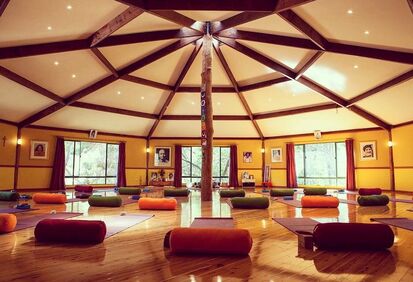
The training is held at Kookaburra Yoga Sanctuary in the Perth hills, a purpose-built studio set within natural bushland owned by mandy. The space offers a quiet and supportive environment for learning, with gardens, accommodation, and retreat facilities that allow for both focused study and time in nature.
Kookaburra Yoga’s integrative approach brings together Hatha, Raja, and Tantra Yoga in a way which is respectful of tradition and relevant to contemporary life. This approach is expressed through the Hatha Yoga Method and underpins all training, classes, and retreats offered at the centre.
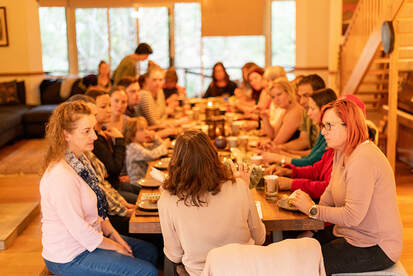
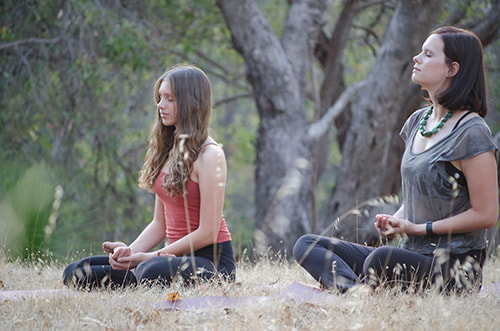
Sangha (community)
|

|
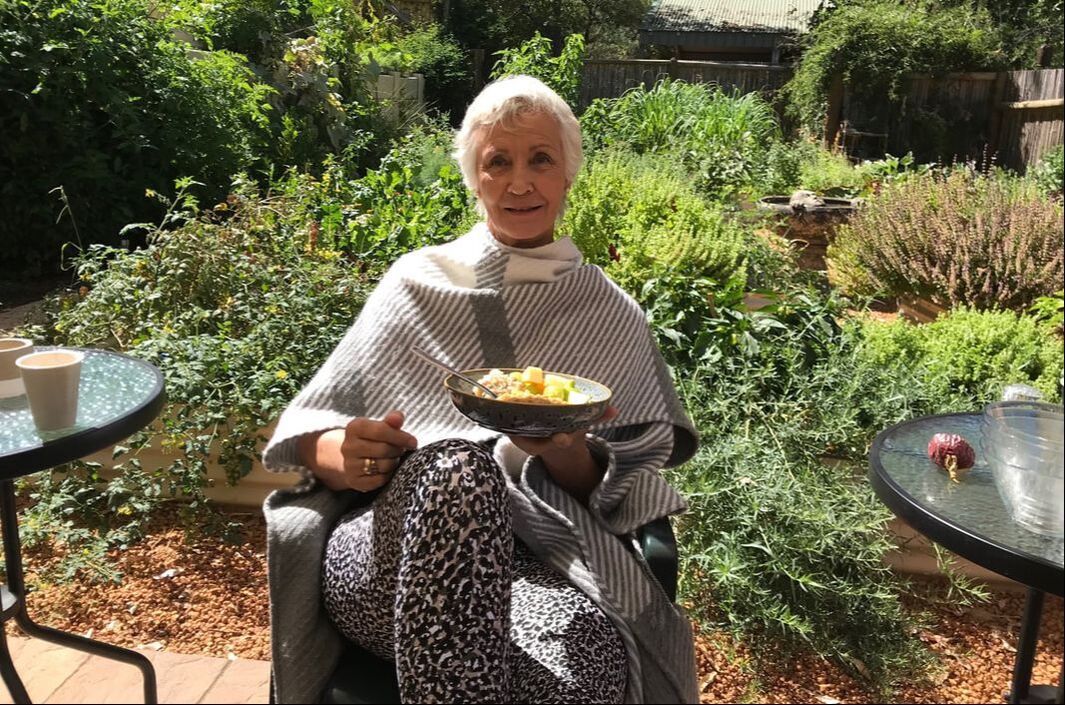
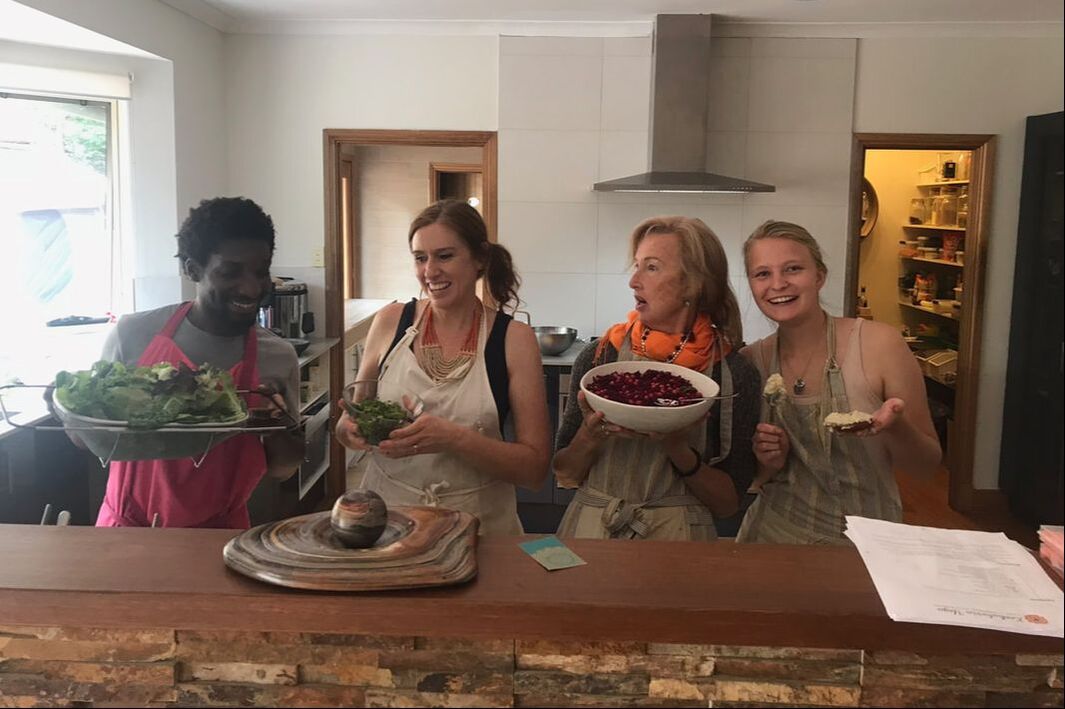
Yogic education in a natural environment, in the company of kind-hearted people, can harmonise and inspire your body, mind and spirit. It can lead you to deeper inner self-knowledge. We welcome you to our beautiful Shala amongst the trees which will be your sanctuary during the 12 months of training.
Enrolment
If you feel ready to take this step, you are invited to begin the process.
There are two ways to begin:
• Attend the Information Session
• Join the Introductory Workshop and complete your application
The training requires a steady level of commitment across the year, and is designed for those who are willing to engage fully with both the practices and the process of learning.
If you have questions, or would like to discuss your circumstances before applying, you are welcome to get in touch by email and request a call.
Facts & Questions
KOOKABURRA YOGA PROGRAMS
- Established, reputable business. Kookaburra Creek Yoga Centre is directed by Mandy BeckerKnox in Perth, Australia. Kookaburra Creek Yoga is well established having been operating for twenty years.
- Health & Safety. Our venue is maintained to a high standard to support the health and wellbeing of participants. We take every precaution to ensure the hygiene and health of participants.
- High quality program. Kookaburra Yoga endorses traditional, authentic and ethical teachers and methods of Yoga. Course and retreat content reflects this standard.
- Socially responsible. We care for people and the planet. All our retreats and programs cause as little harm as possible. We are an entirely vegetarian, eco-friendly and cruelty-free venue.
- Personal development. Kookaburra Yoga presents programs which are an opportunity for personal and professional development. You'll be gently guided to explore limitations and obstacles to achieving your potential and become equipped with the tools, techniques and practical wisdom to evolve and grow.
DO I need experience in Yoga to attend thIS TEACHER TRAINING?
The Teacher Training Program is best suited to yoga and meditation practitioners with some experience and prior exposure to the concepts. It is a prerequisite to have 12 months experience practicing yoga in some capacity. However anyone interested in embarking upon a journey of self enquiry and discovery is invited to attend. The yoga and meditation practices are carefully explained and taught in a caring and respectful manner. Please check for recommended resources and reading prior to attending. The program is also suited to professionals wishing to integrate yoga and yogic meditation into the scope of their existing work.
WHAT ARE THE PAYMENT OPTIONS?
- $450 non-refundable deposit is required when applying to secure your place. If your application is not accepted this will be returned.
- 6, 9 ,12 month payment plans available for an additional $100.
- 18, 24 month payment plans available by special request for an additional $200. You can apply for this and must demonstrate financial need.
- Payments in full made by direct deposit by 8 November are eligible for $200 earlybird discount.
CANCELLATION & REFUND POLICY
- Cancellations received before the training commencement will be eligible for a refund minus the $450 non-refundable deposit.
- There is a cooling off period of 4 months. Cancellations up to 4 months are allowed. You will be required to pay prorata fees for the modules studied, calculated at $420 per module and the deposit. Therefore if you withdraw after Module 1 and before Module 2 $870 is payable by you, if you withdraw before Module 3 $1290 is payable, if you withdraw before module 4 is $1710. Withdrawals after Module 4 are liable for payment of the full fees.
- If you withdraw within 4 months and you have paid fees upfront, then your refund will be calculated on the above formula. If you are on a payment plan then refunds will not be issued and you are still liable for the pro-rata fees on the above formula.
- If you withdraw and depending on your circumstances, you may transfer the unused balance of your payment to a future training, or another course or program with Kookaburra Yoga on compassionate grounds.
- If this program is cancelled, rescheduled or postponed prior to its commencement due to unforeseen circumstances or any other event that renders performance of this training impracticable, illegal or impossible, then you will receive full refund. However, Kookaburra Yoga will not be responsible for any loss or damage as a result of a substitution, alteration or cancellation/postponement of this training.
What if I become UNWELL or circumstances change?
- You should be fine to attend if you are in reasonable health. Please check with your own health care provider if you have any concerns or doubts.
- If you become sick or injured during the training, or you need to withdraw for compassionate reasons, then a pro-rata refund can be negotiated, or you can transfer to a future training program.
- If you become sick during your time at Kookaburra Creek, an after hours locum doctor (bulk billed) can be called or you can attend the Armadale Hospital Emergency Department (24 hours emergency) which is 5 minutes by car.
VENUE DETAILS
- Kookaburra Creek Yoga Centre is a purpose-built yoga centre in Bedfordale in the Perth hills with capacity and equipment for 40 students.
- The centre is set on 10 acres of bushland and is quiet and serene conducive to yoga, meditation and reflection.
- The teacher training capacity is 30 students.
WHAT SHOULD I BRING?
- printed or electronic course notes for each module.
- notebook and pen, or laptop if you prefer for note-taking.
- Required books and readings for each module. You don't need to bring 'suggested books'.
WHEN CAN I TEACH?
Upon graduating you will receive a certificate of completion which will enable you to acquire public liability and professional indemnity insurance. Once you are insured, have completed your Senior First Aid Certificate you will be ready to begin teaching professionally. This teacher training is registered with Yoga Australia, and upon graduation, we recommend you register as a Level 1 or Level 2 Teacher depending on your eligibility.
HOW TO APPLY & PAY
- Click the APPLY NOW button on this page.
- Complete the form and SUBMIT. This takes you to our BOOKING/PAYMENT PAGE
- Select your preferred payment option (upfront, payment plan, earlybird)
- Pay the $450 deposit through Paypal or by Credit Card. You also have the option of paying the full amount on booking.
- If you prefer to pay by Direct Deposit select 'Book for free now and pay later' and make your payment to our bank account. We will send you the details.
- To pay in full and receive EARLYBIRD discount of $200 select 'Book for free now and pay later' . Please then transfer the full amount of $5,300 to our bank account by the due date.
- You will receive a Payment Information Email with details on how to pay the balance according to your choice of Upfront Payment or Payment Plan.
- By submitting the Application Form and proceeding to the Payment Page you are agreeing to the Terms and Conditions. Please read them carefully before proceeding.
|
Contact Program Coordinator and Lead Trainer Mandy Knox Admin Support Dani Woolhouse Email [email protected] Address 210 Carradine Road, Bedfordale WA Facebook Kookaburra Yoga Instagram @kookaburrayoga |
|
Kookaburra Yoga
210 Carradine Road, Bedfordale WA 6112 Australia Email: [email protected] Phone +61 8 9399 1000 |
|